ACID board to review $3.46 million offseason canal work package
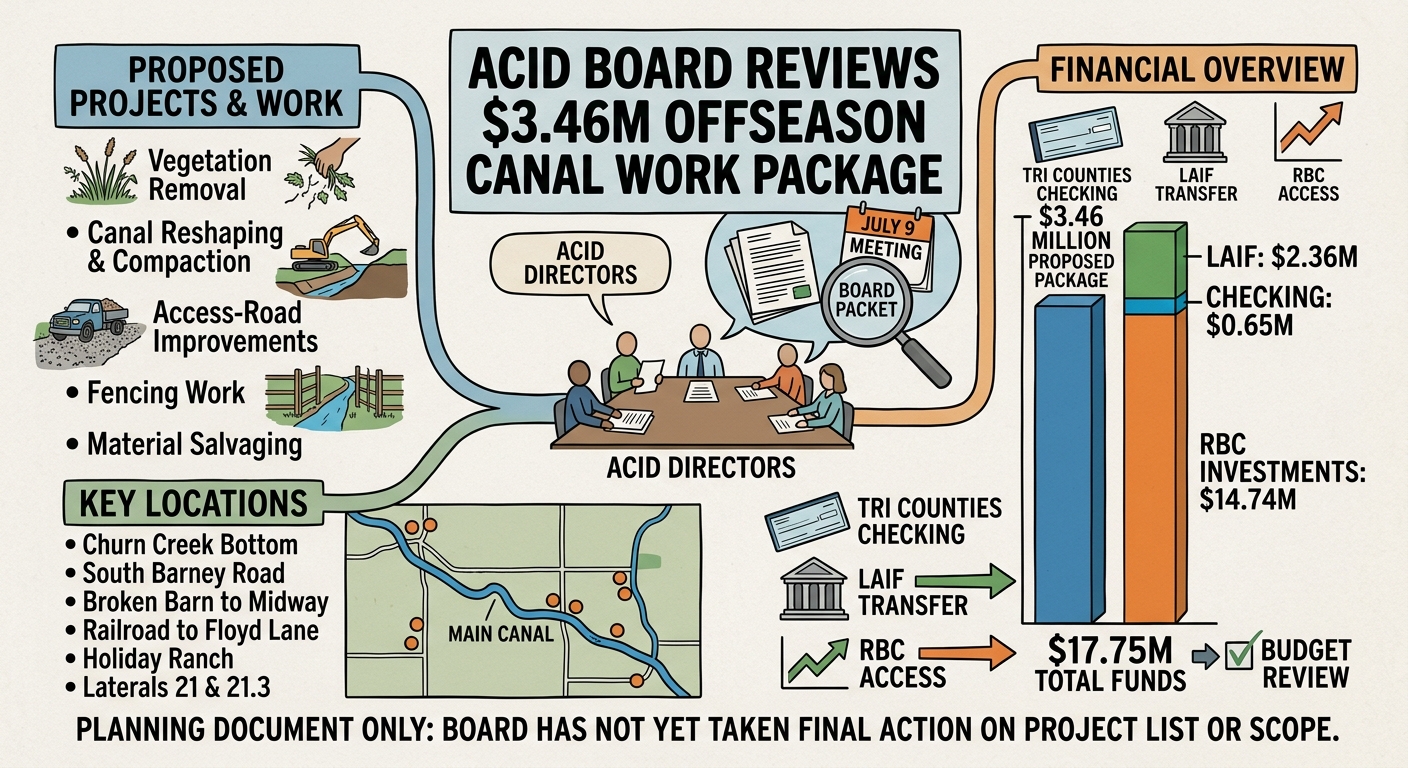
The July 9 agenda puts a large offseason construction package before Anderson-Cottonwood Irrigation District directors, with work planned across multiple canal and lateral segments.


The July 9 agenda puts a large offseason construction package before Anderson-Cottonwood Irrigation District directors, with work planned across multiple canal and lateral segments.

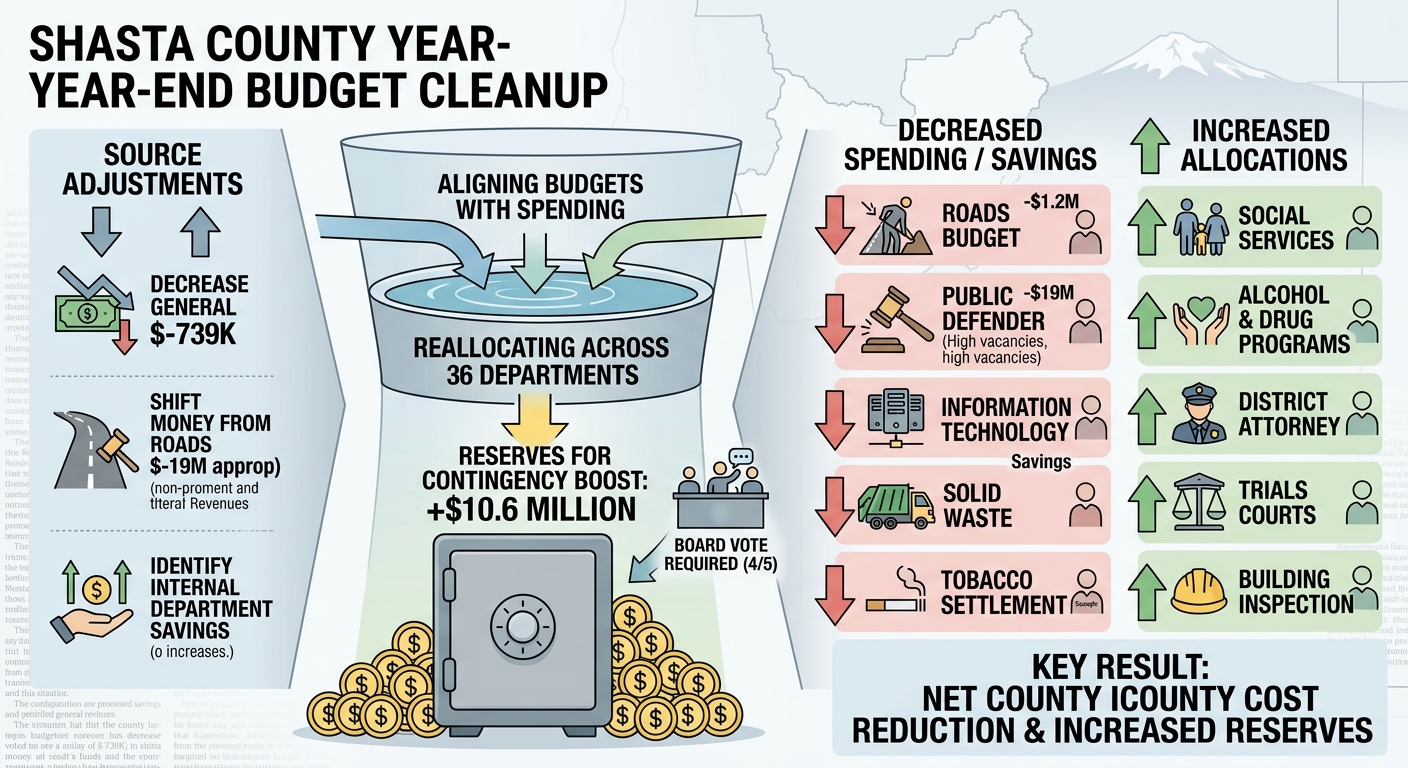
County staff are asking supervisors to approve 36 year-end FY 2025-26 budget amendments, including major shifts in roads, public defender and general revenue accounts.

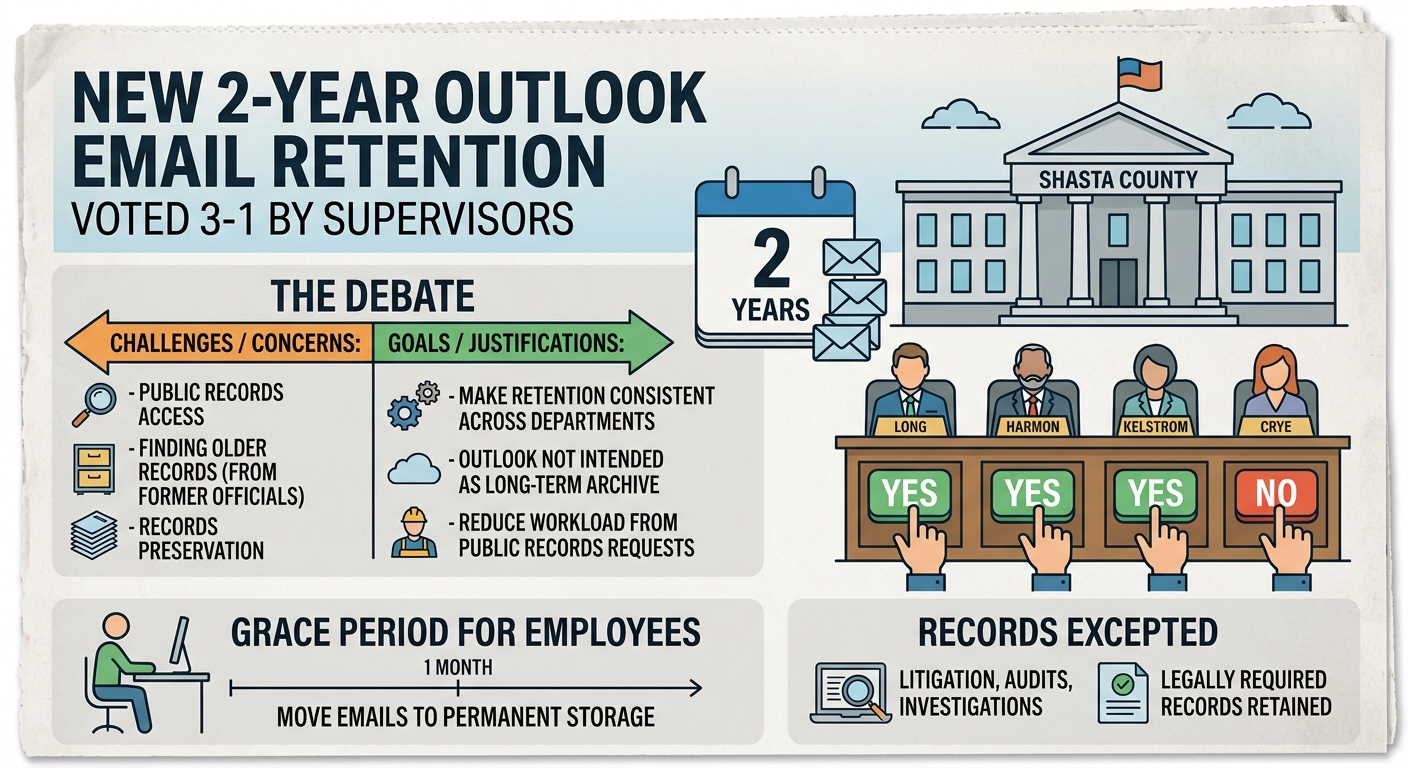
The board backed a county policy that will let Outlook emails auto-delete after two years, with a one-month grace period and exceptions for litigation, audits and investigations.

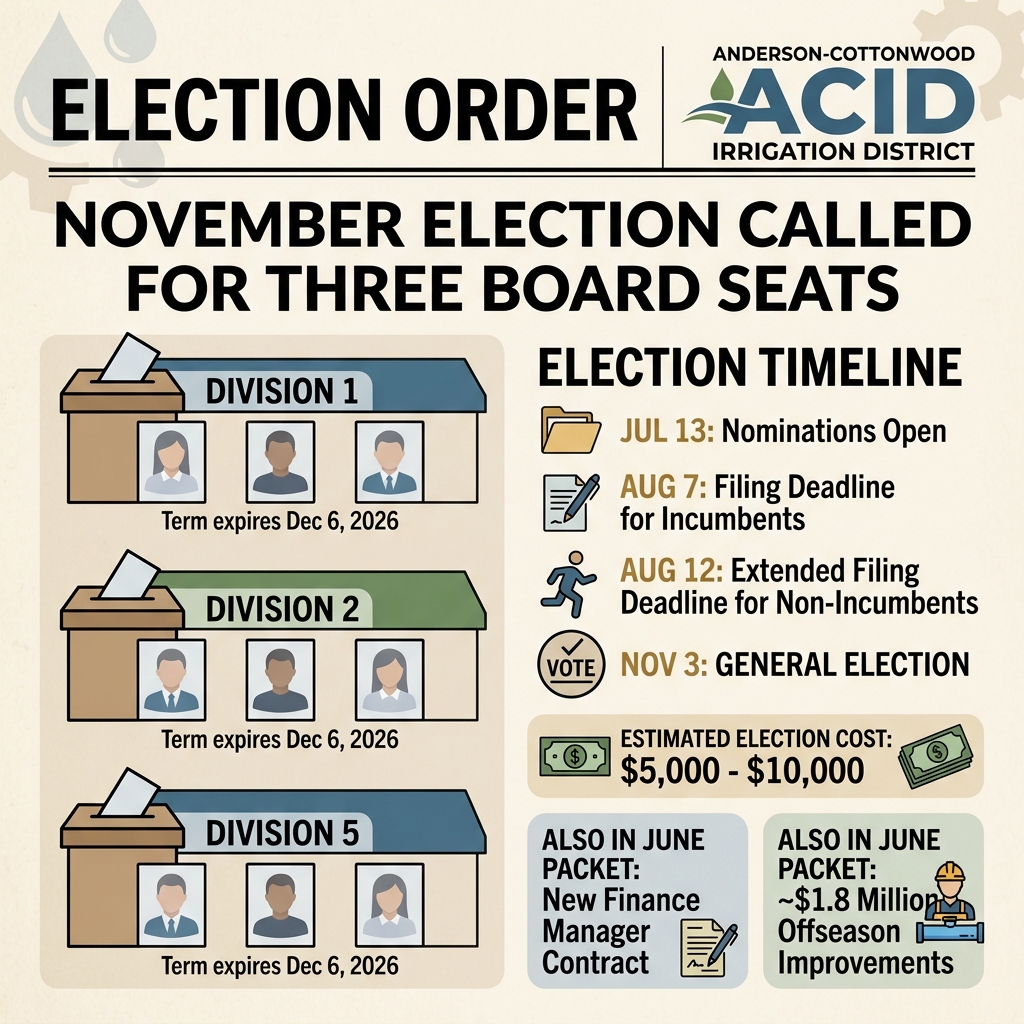
The district’s June 11 packet puts a November election resolution before directors, along with filing dates, candidate-statement rules and an estimated cost of $5,000 to $10,000.

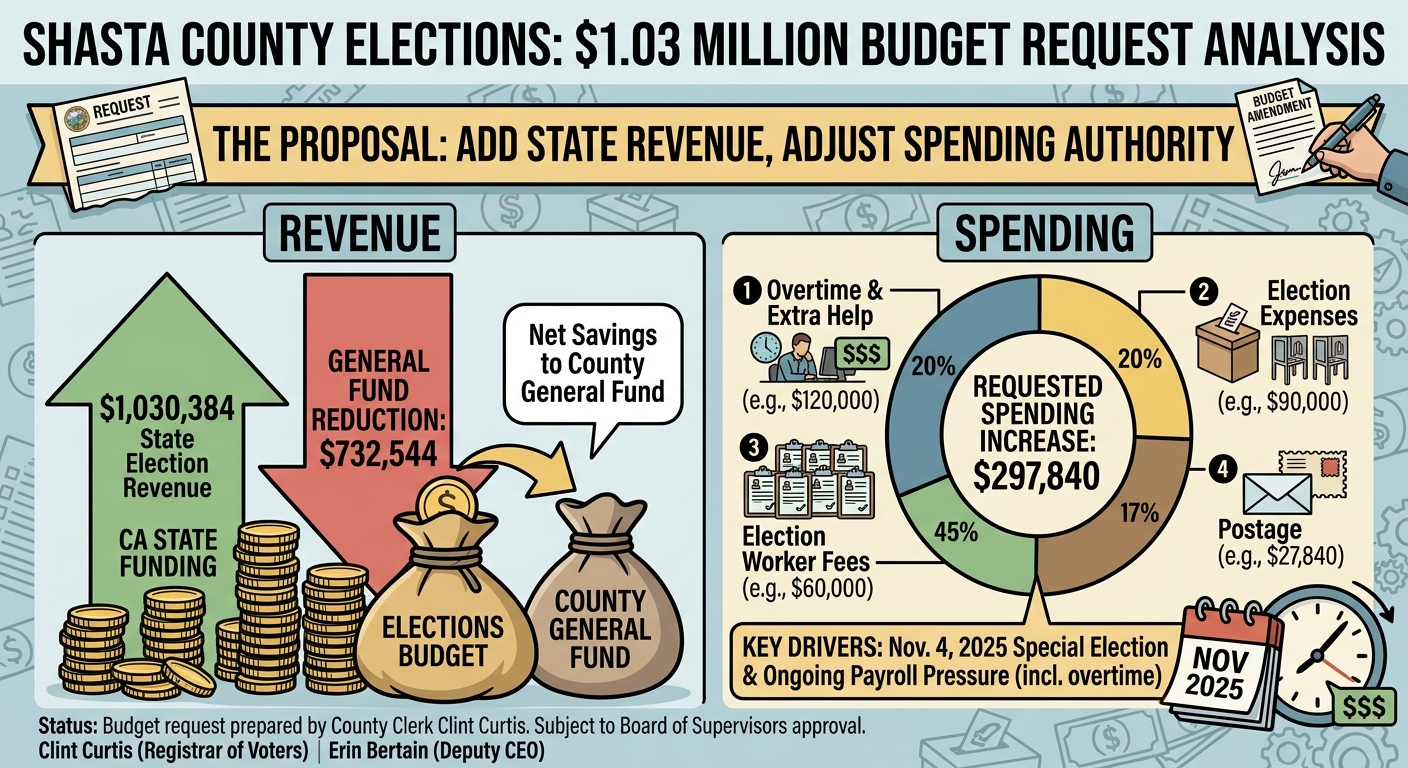
A June 16 budget amendment would add spending authority to the Elections Department and reduce General Fund use by $732,544 if approved.

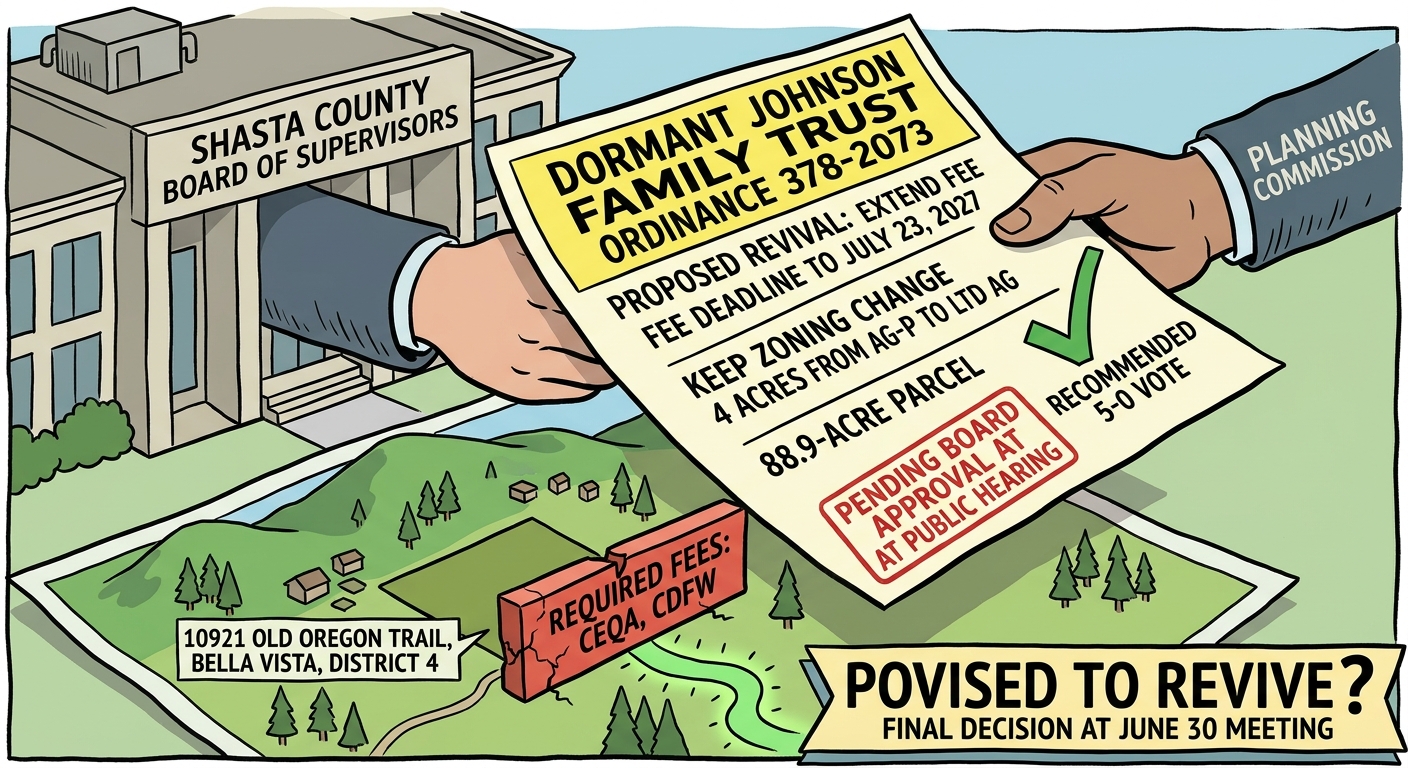
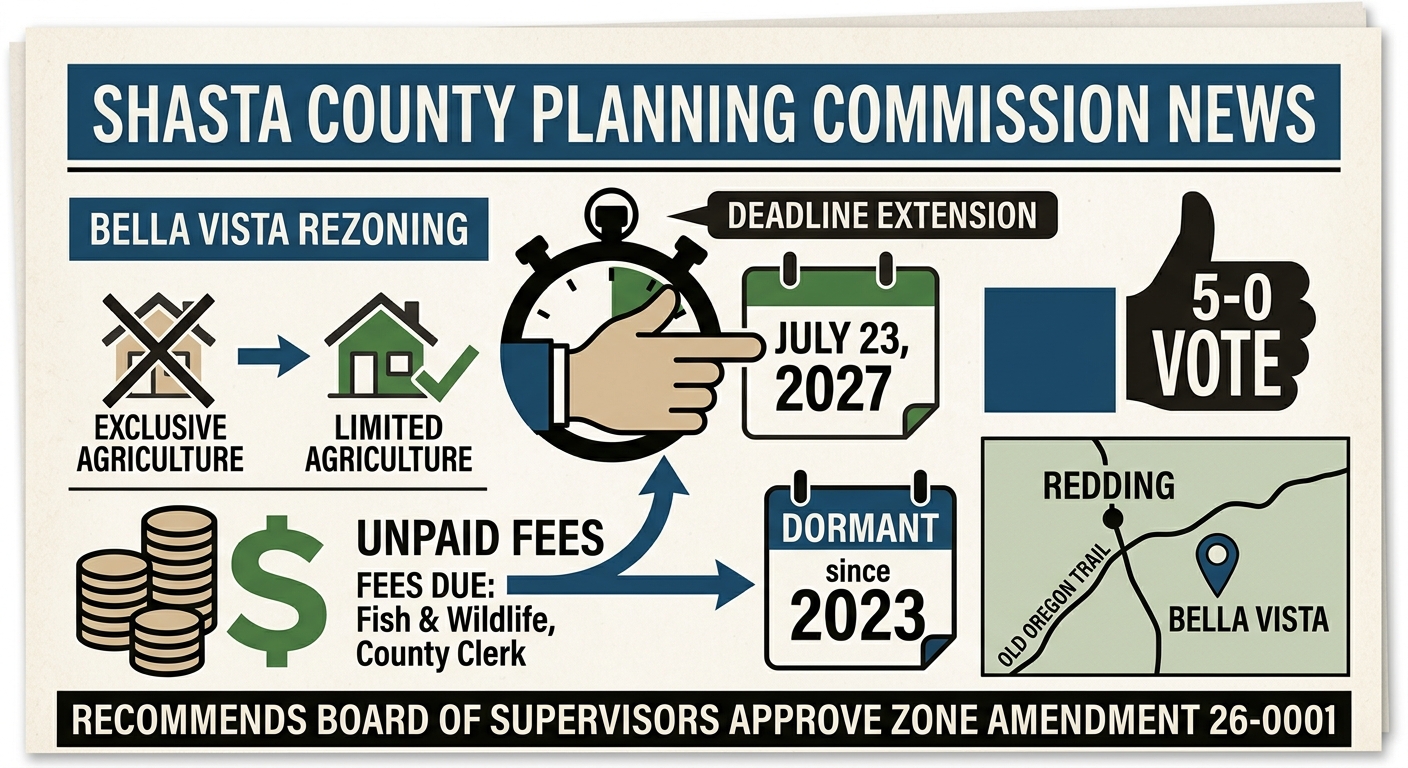
The board is weighing a narrow cleanup amendment that would extend a missed fee deadline and make a 2023 zoning approval operative.

A planning commission resolution recommends giving the Johnson Family Trust more time to pay filing fees tied to a 2023 zoning change that never took effect.

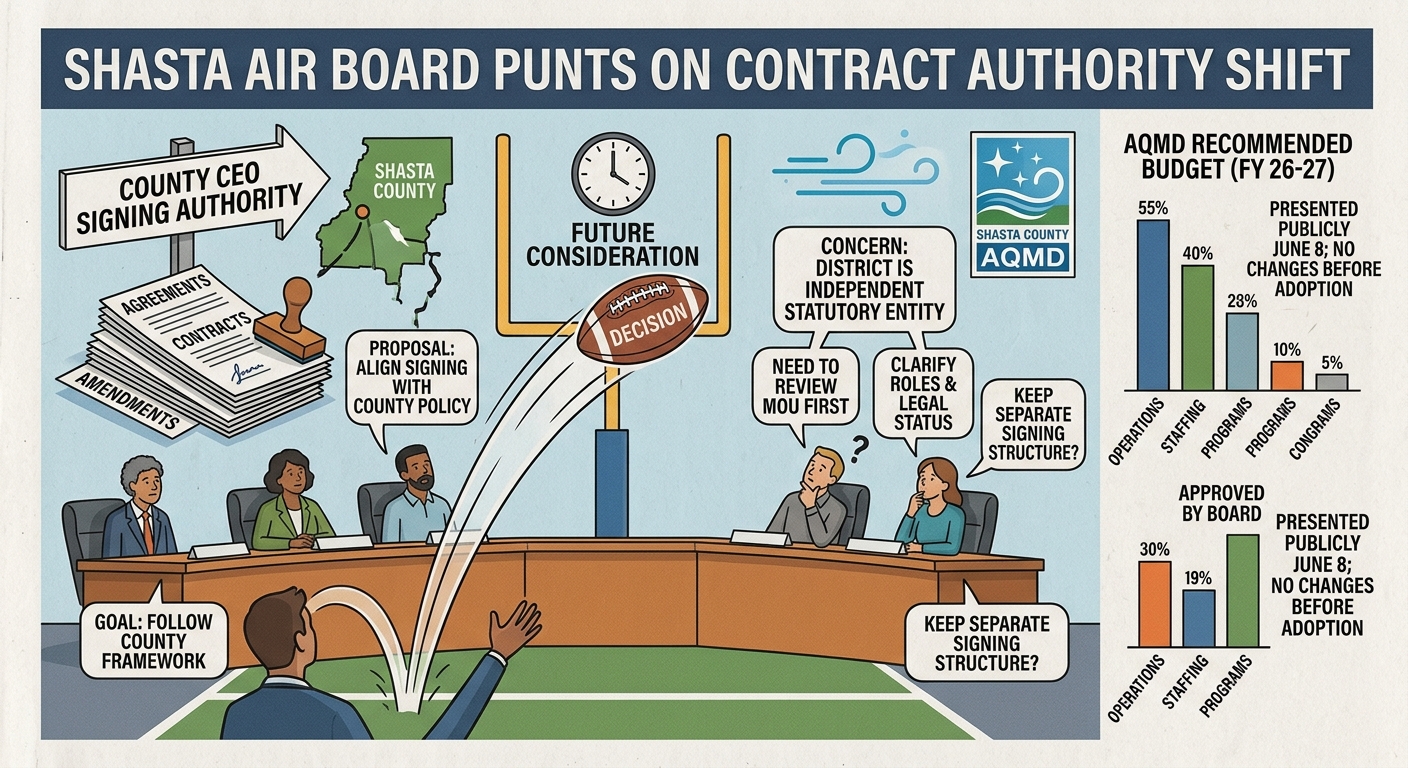
The board split a consent item June 30 and deferred a proposal to let the county CEO sign air-district contracts while members called for more review of the county MOU.

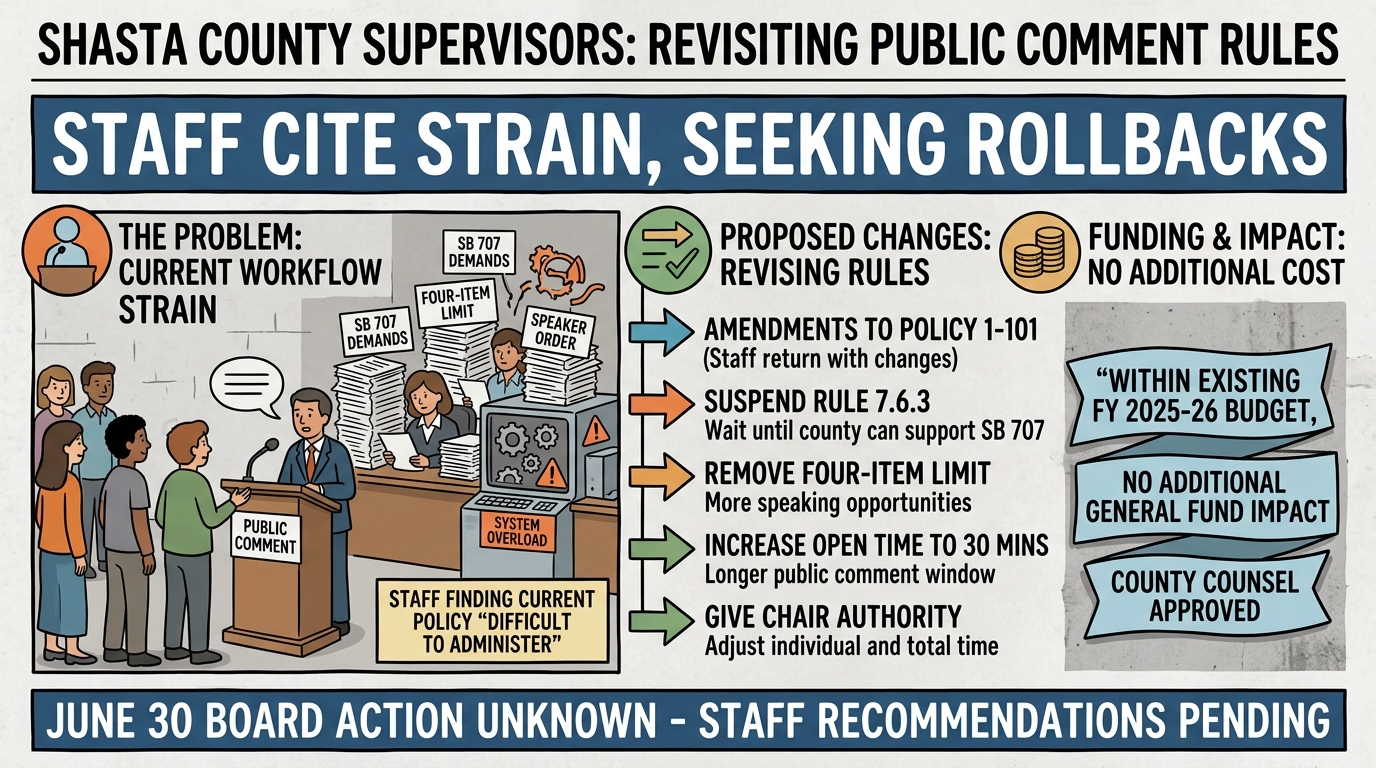
A June 23 staff report says Shasta County cannot fully support part of its new SB 707 comment workflow and asks supervisors to suspend a rule and rewrite the policy before June 30.

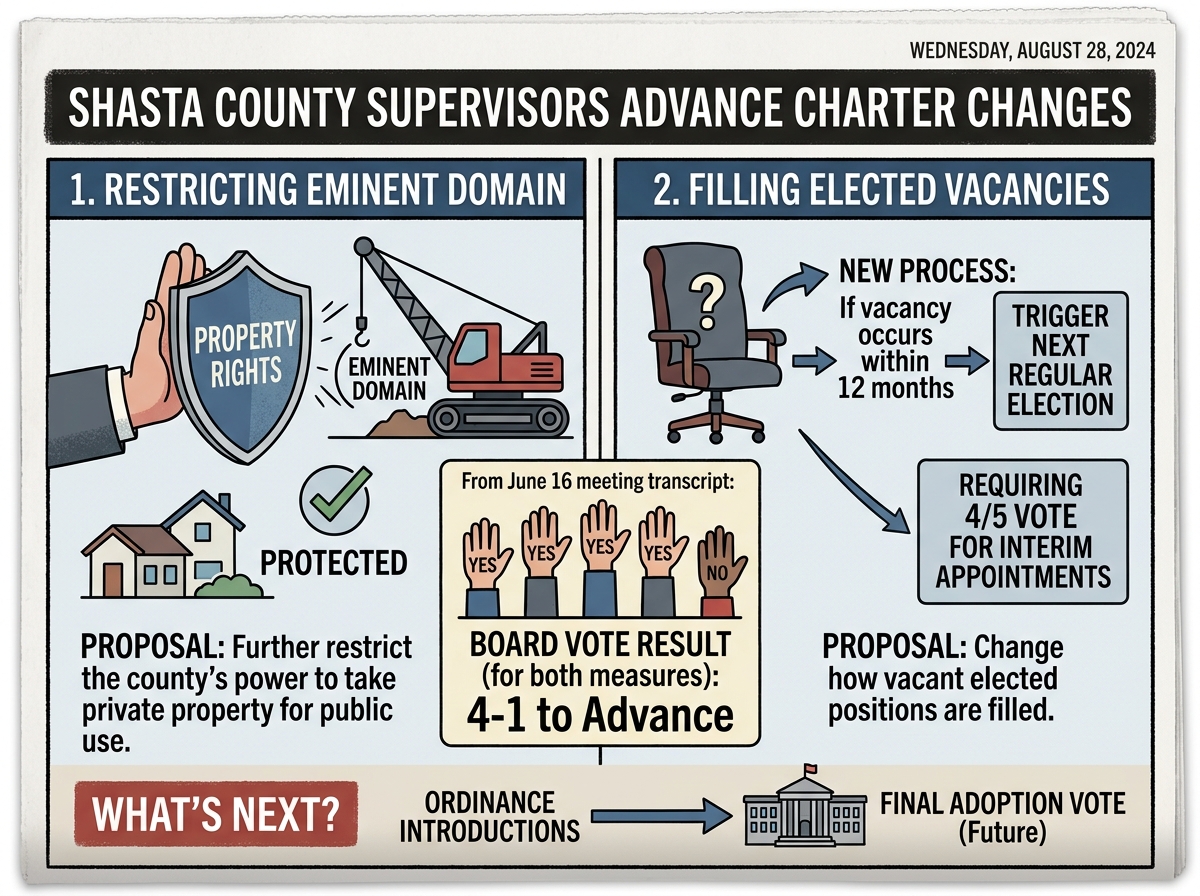
The board sent two charter-related measures to the ordinance pipeline after public hearing and discussion.

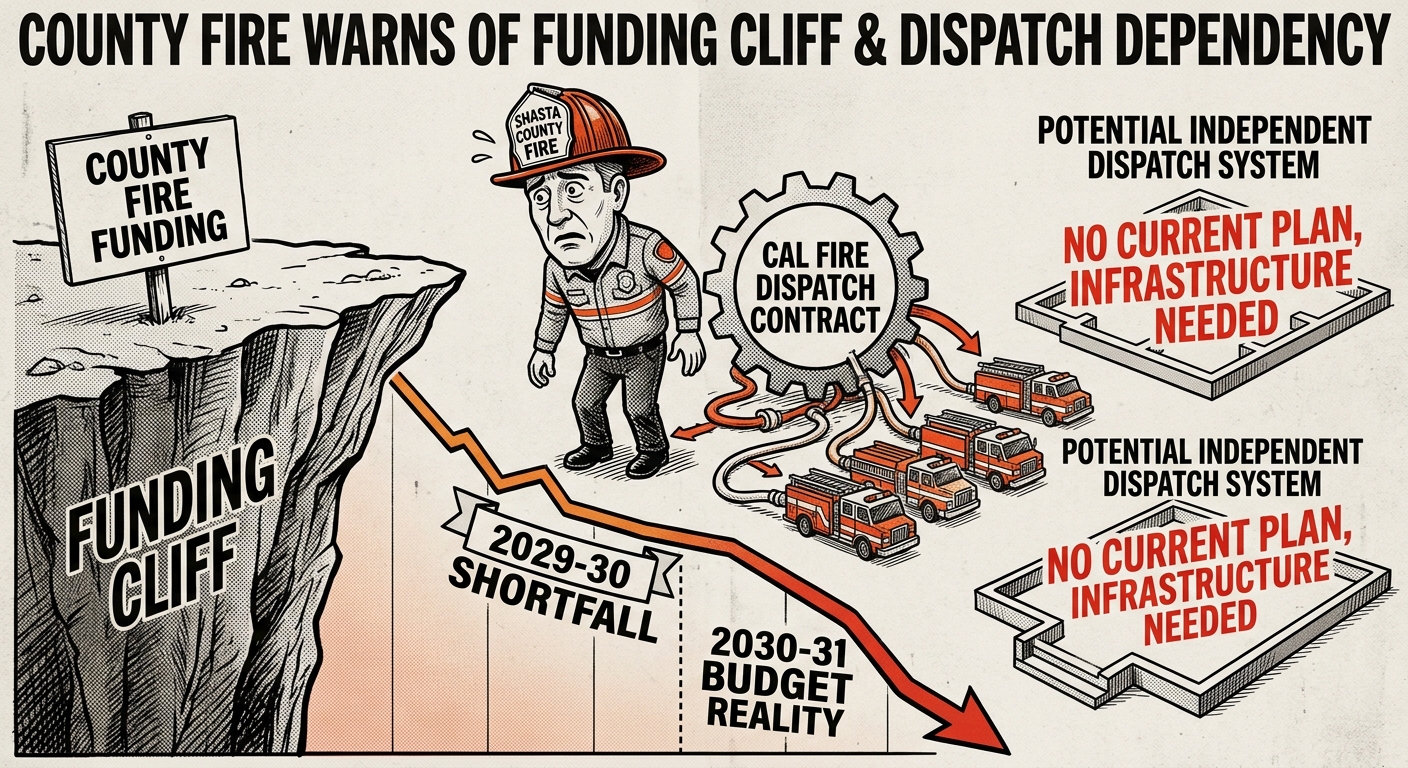
Chief Sean O’Hare told Shasta County supervisors the department’s current fire model is being propped up by contract savings and settlement-funded equipment, but a larger gap looms in 2030-31. He also said county fire dispatch is part of the CAL FIRE cooperative agreement and would need a replacement system if the county ever left the contract.

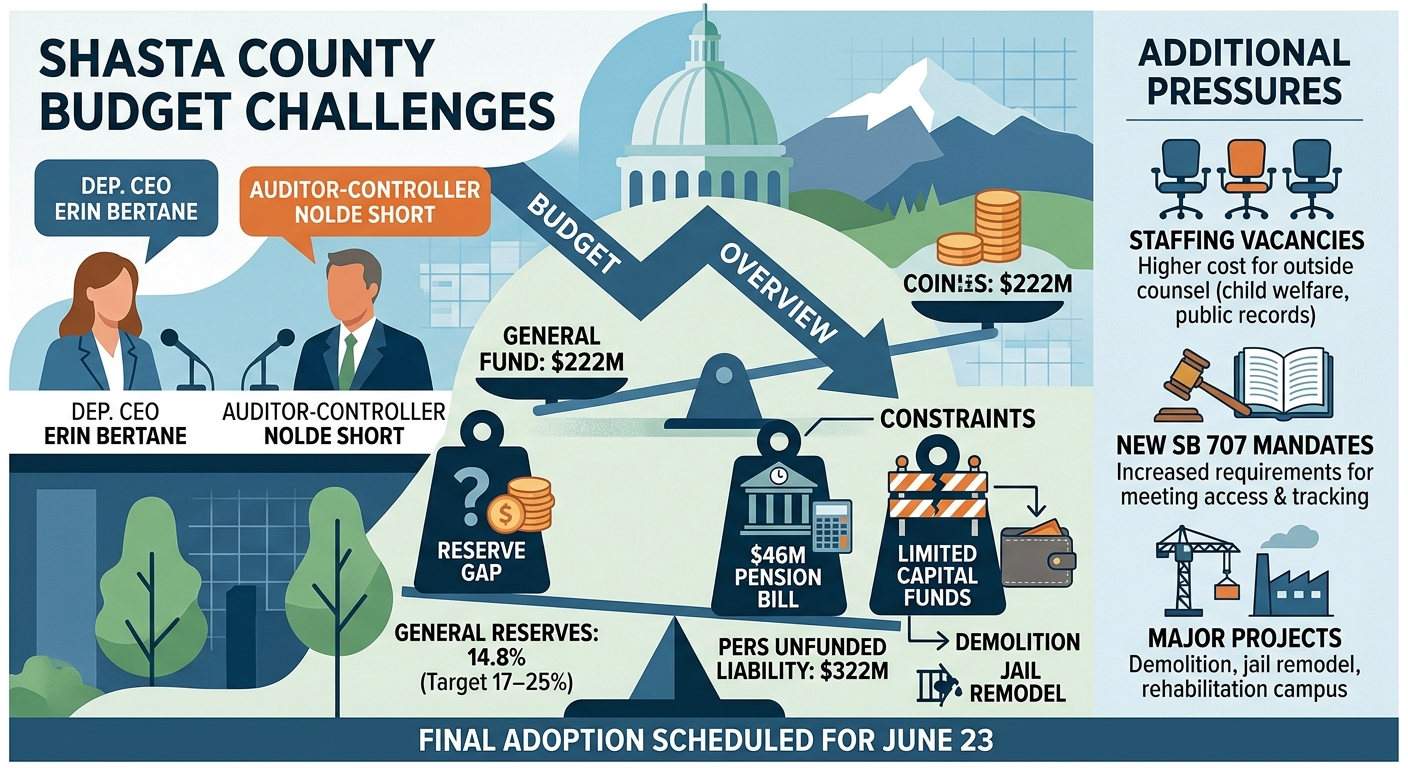
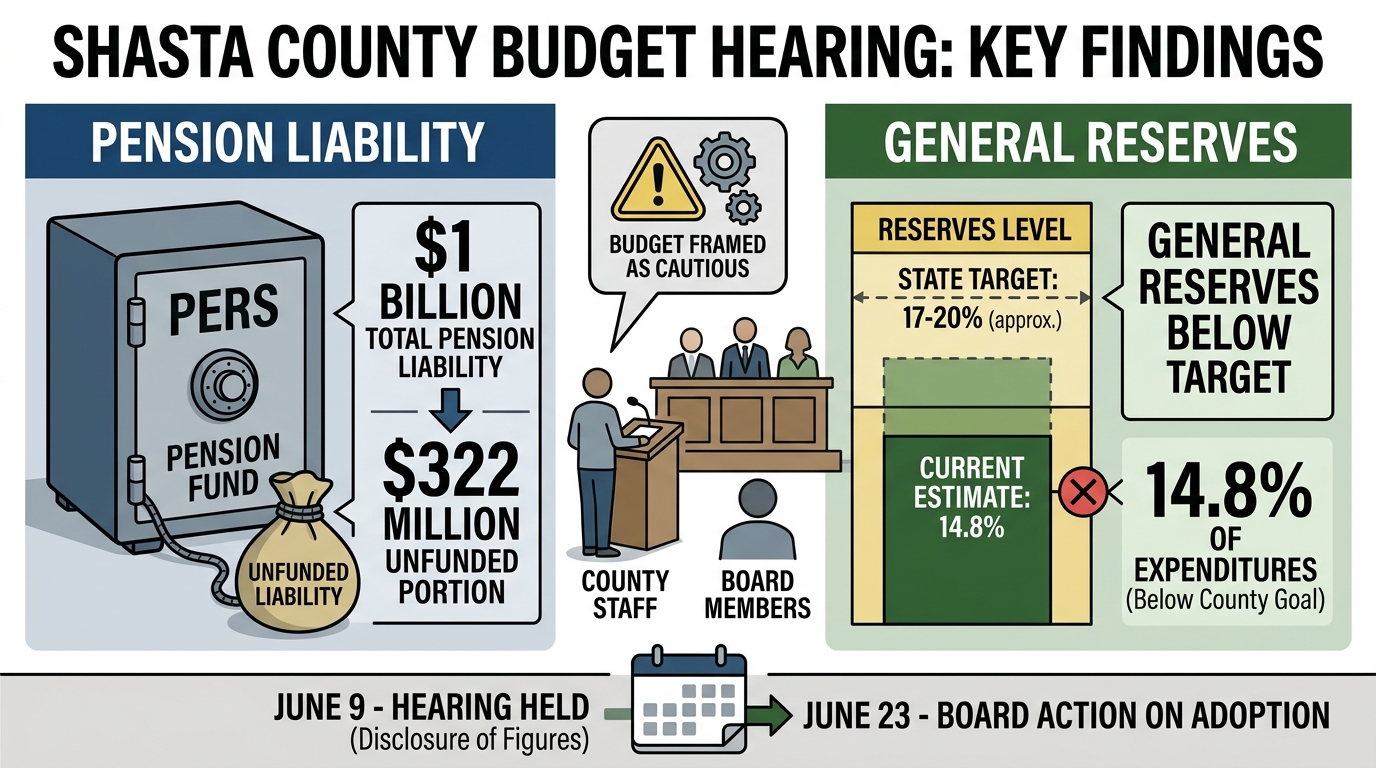
At the June 9 hearing, county officials put a $658 million recommended budget, reserves below policy target and a projected $46 million pension contribution on the record ahead of June 23 adoption.

County staff said general reserves would fall to 14.8% of general fund expenditures as supervisors weighed a recommended budget shaped by retirement costs and other long-term obligations.

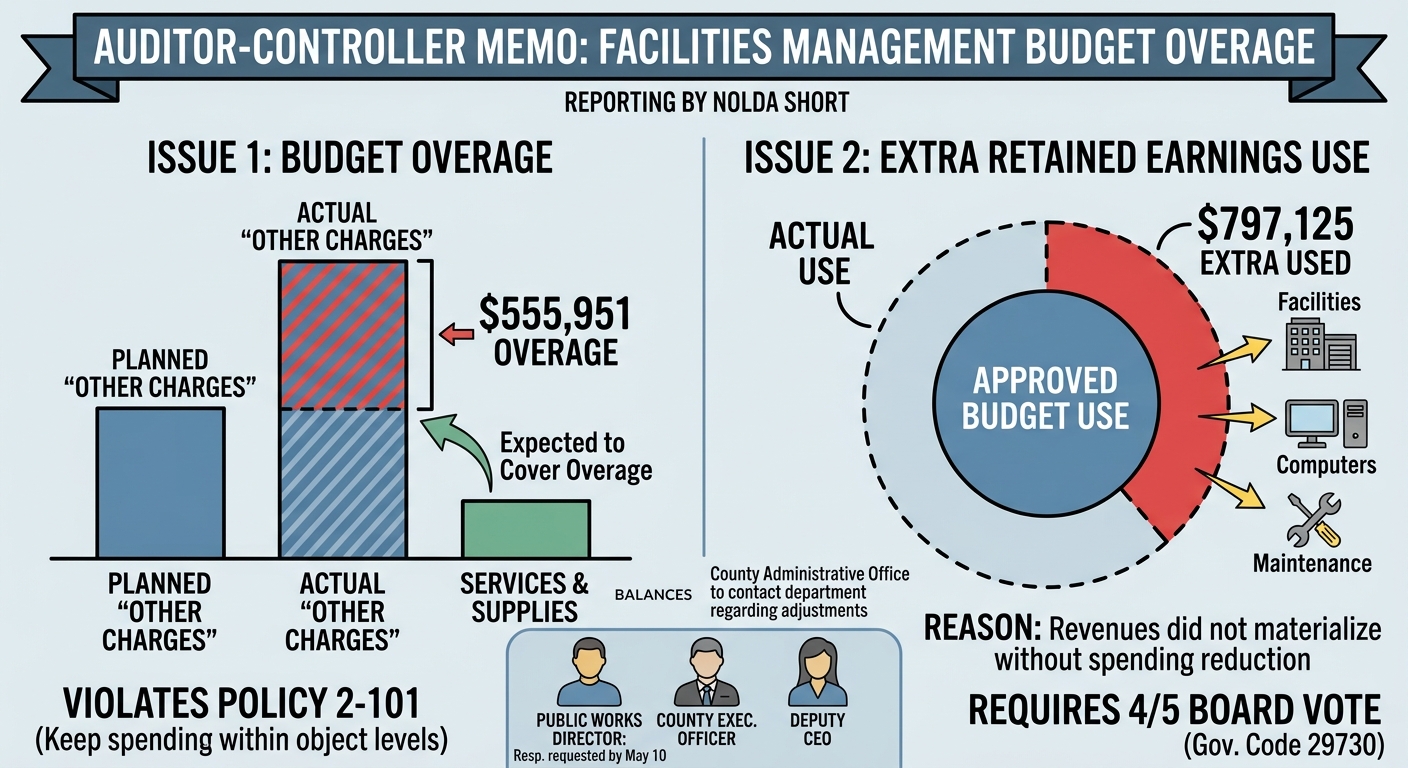
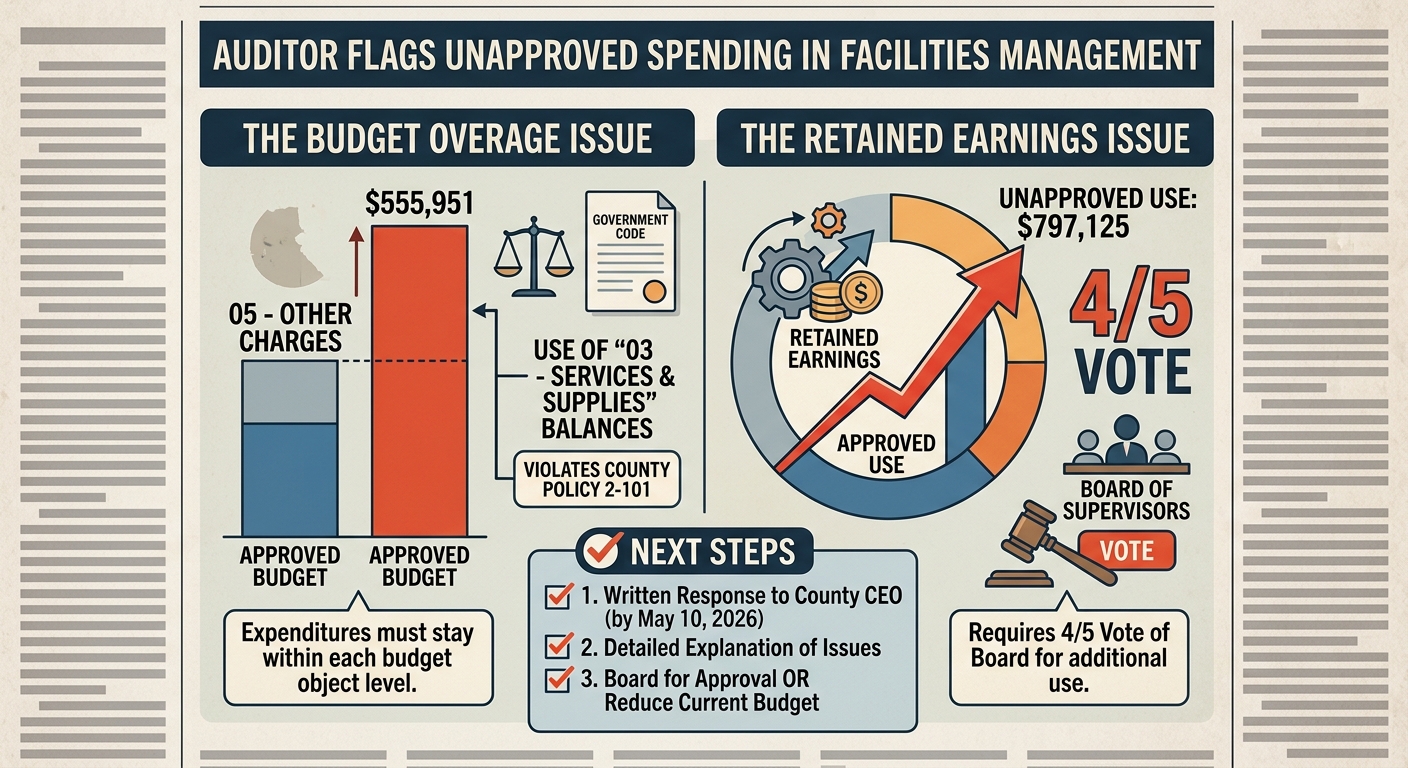
A county memo says Facilities Management exceeded one object-level budget category by $555,951 and used $797,125 more in retained earnings than approved, triggering a request for a written response and possible board action.

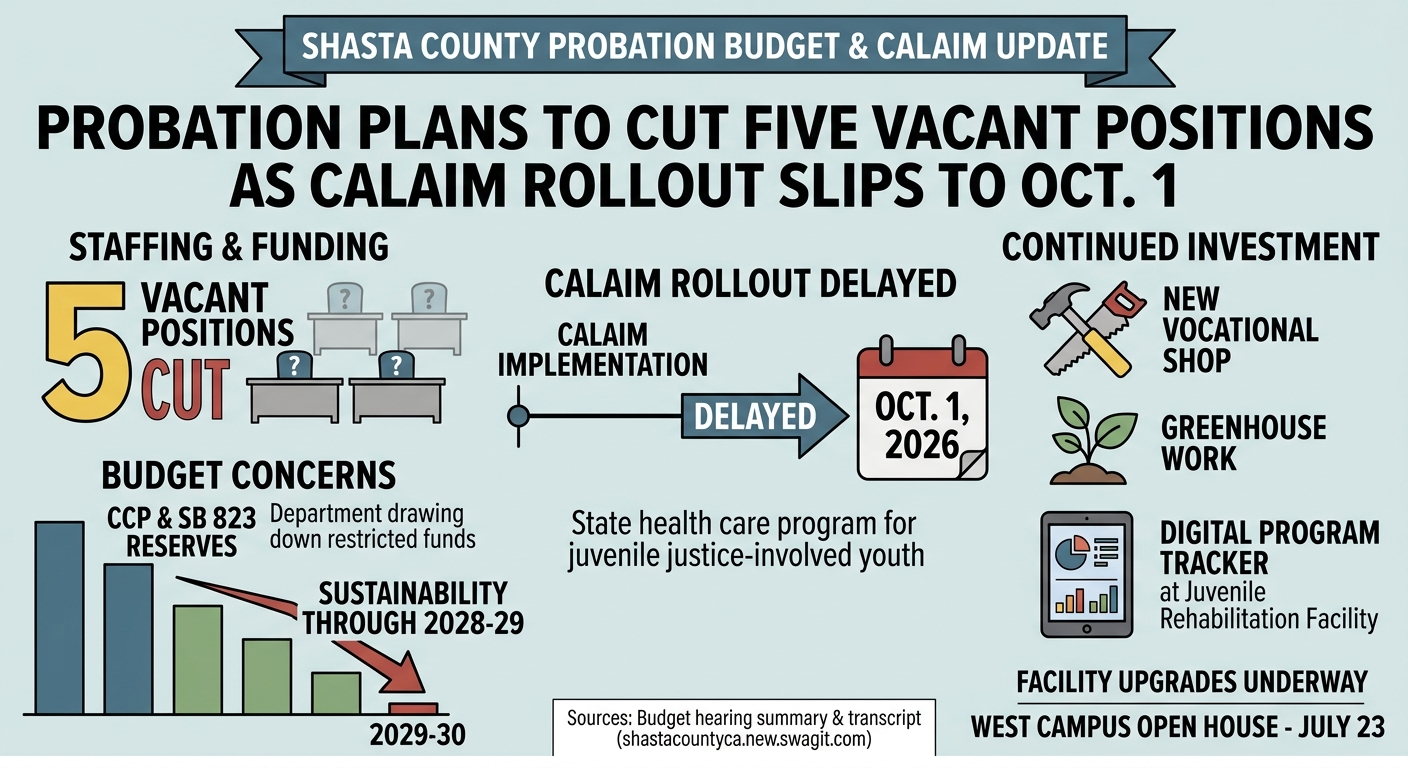
Tracy Neal told Shasta County supervisors the department is trimming payroll while preparing for a delayed CALAIM launch and drawing down restricted CCP and SB 823 balances.

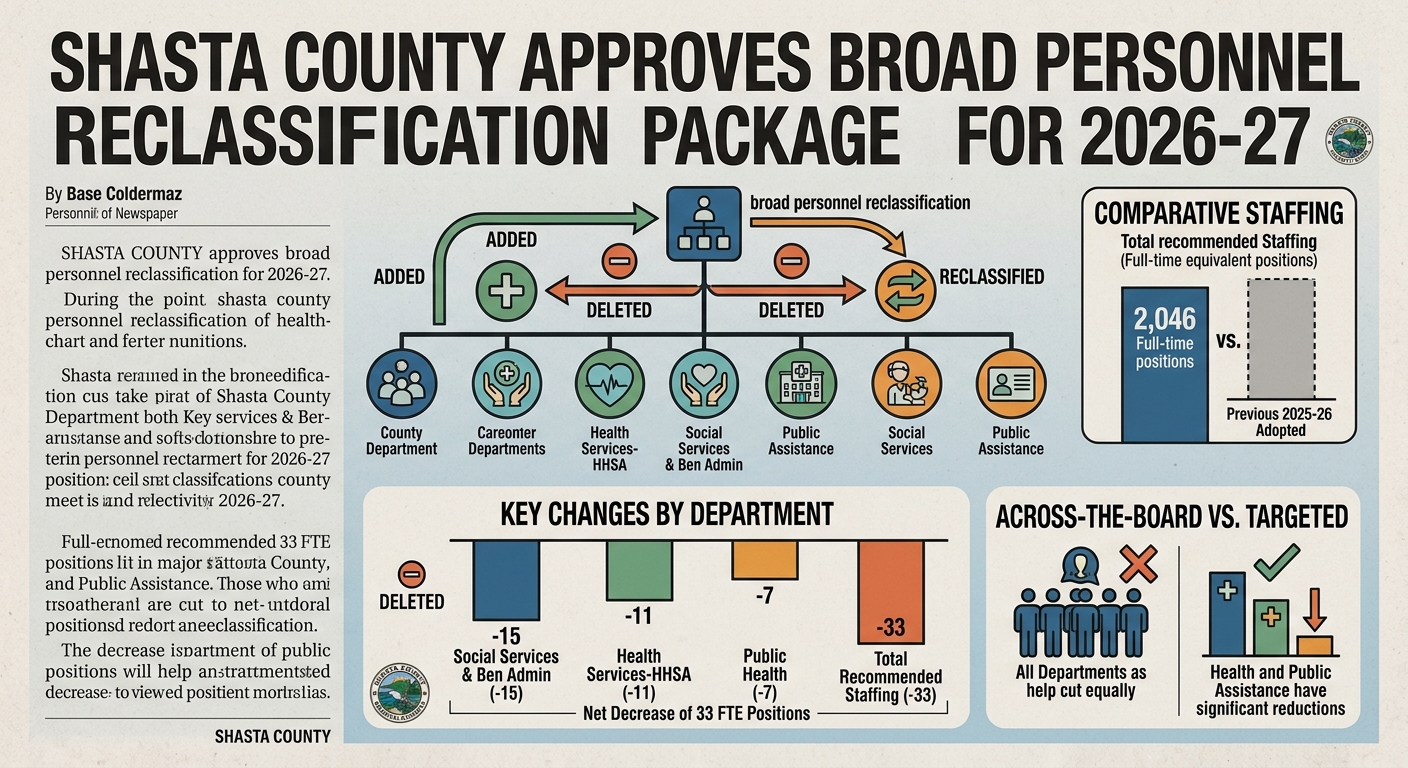
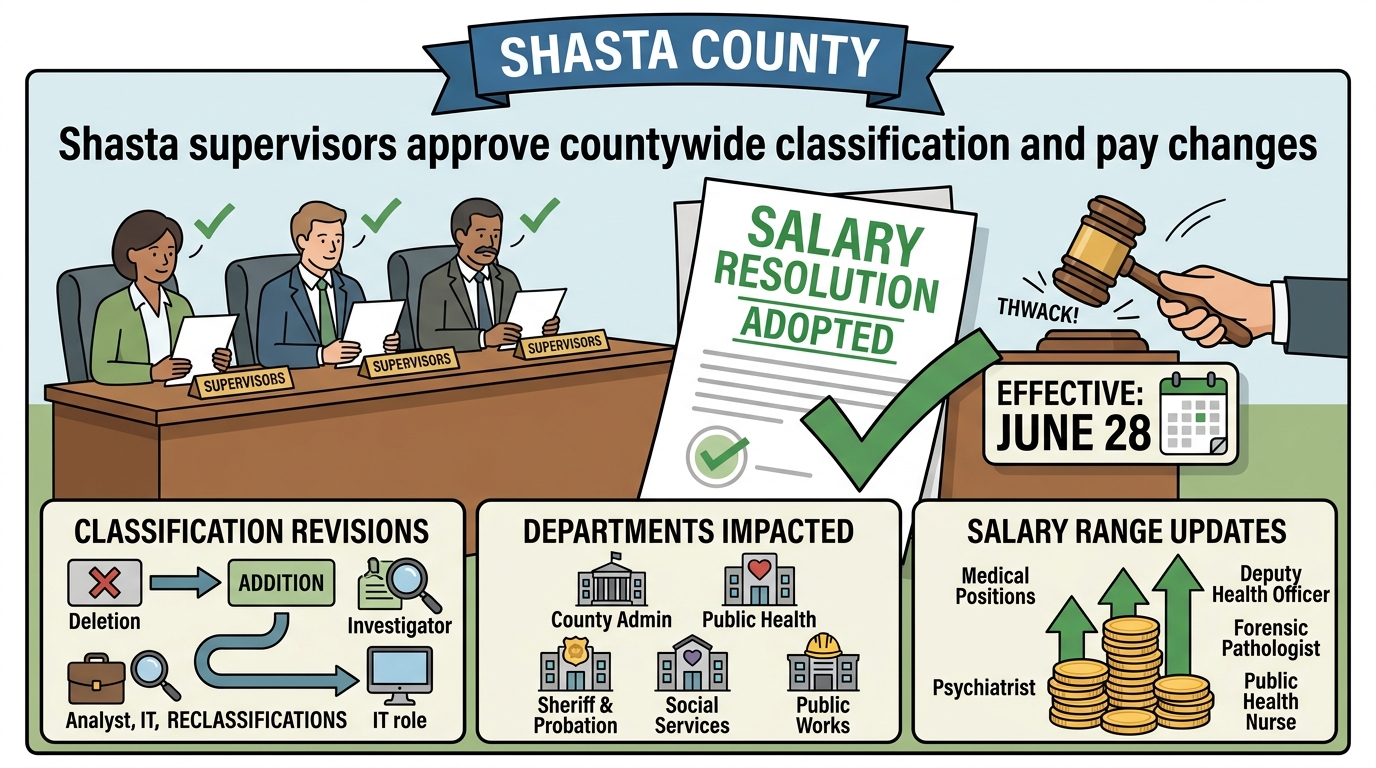
The board adopted a salary resolution that amends county classifications, pay schedule language and the position allocation list effective June 28, with staffing changes spread across public safety, health and human services, IT and public works.

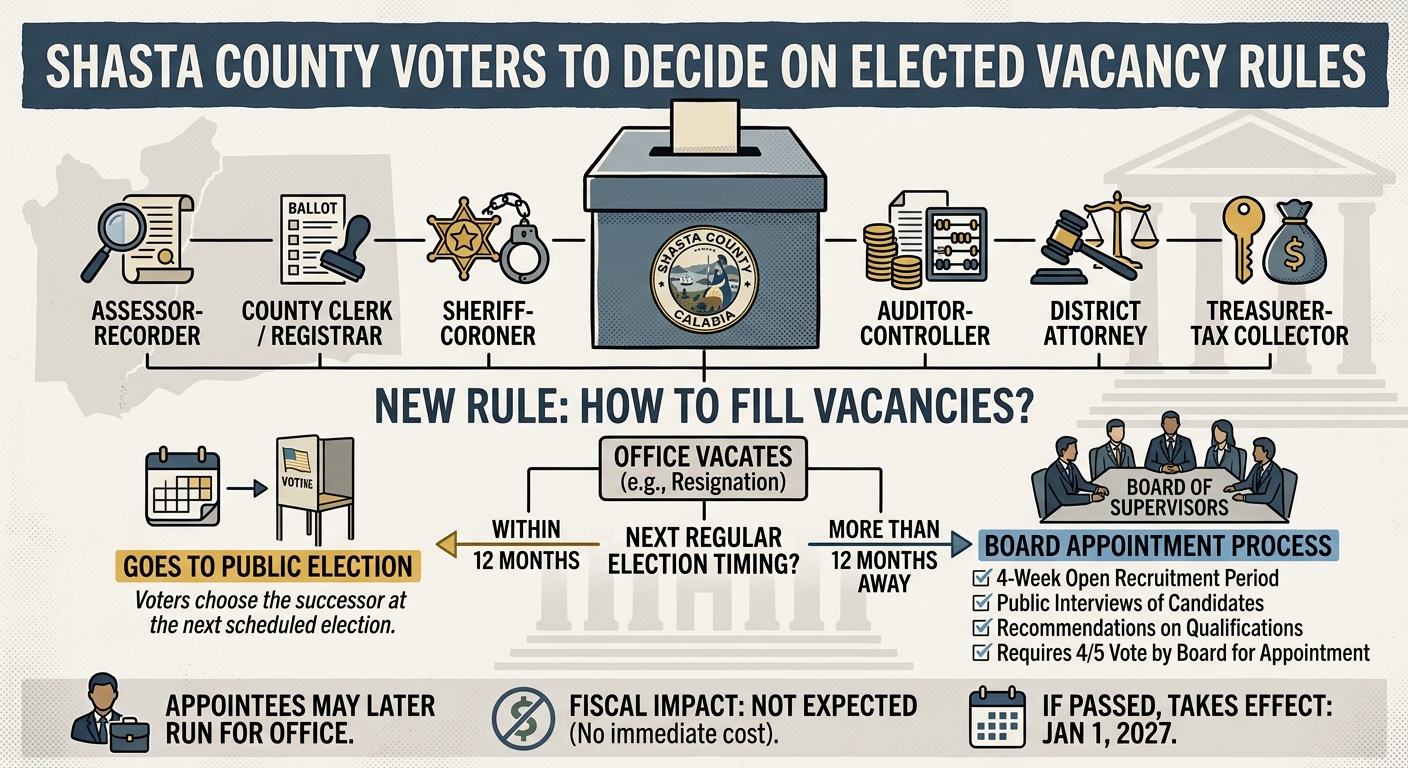
The proposal would send some midterm vacancies in six elected county offices to election if the next regular vote is within a year, or else use open recruitment and board appointments.

The June 23 resolution rewrites parts of the county’s salary schedule and position allocation list, effective June 28.

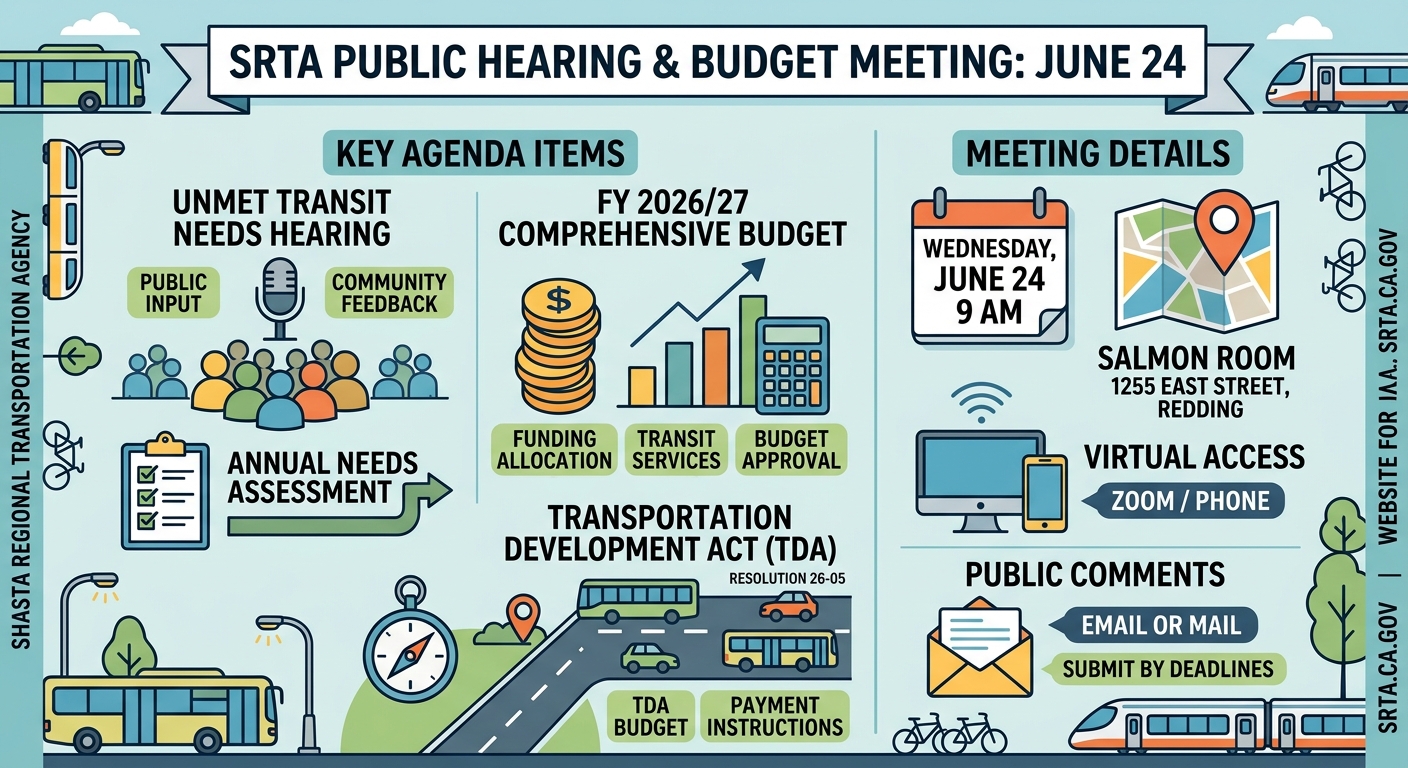
The Shasta Regional Transportation Agency board is set to hear public comment on unmet transit needs and vote on its comprehensive budget, along with related TDA actions, at its June 24 meeting in Redding.

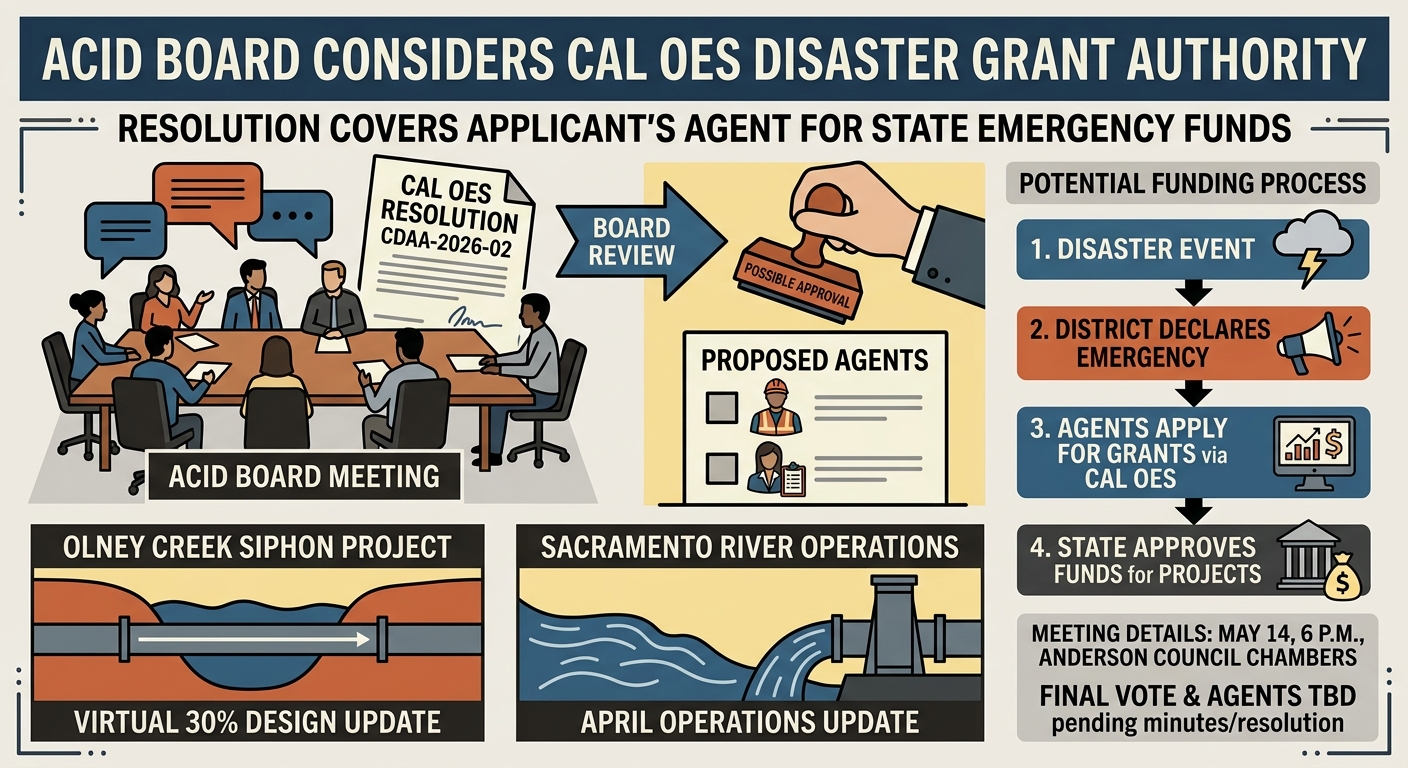
The district’s May 14 packet puts a Cal OES applicant-agent resolution on the agenda, alongside project updates and closed-session items.

The Auditor-Controller memo says Facilities Management exceeded one budget object level and used retained earnings above what was approved, potentially requiring Board action.

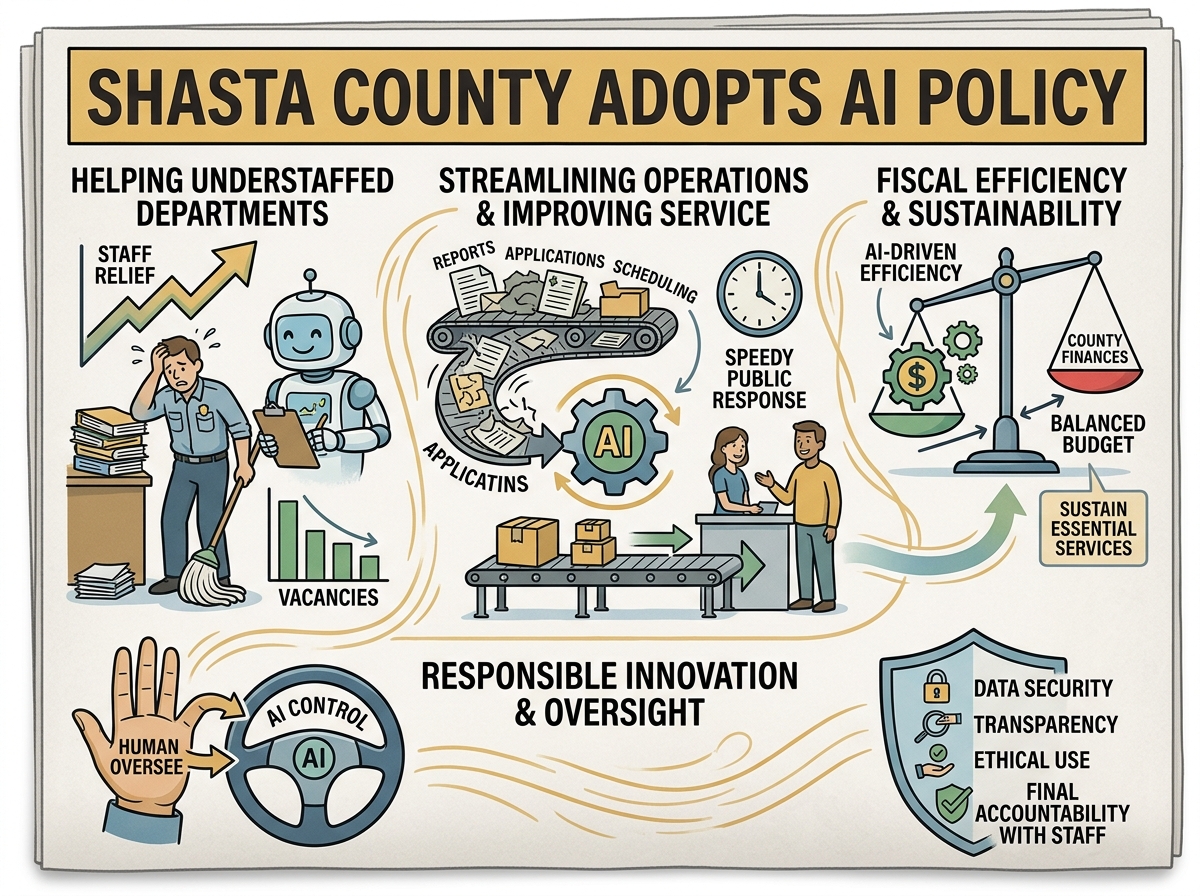
The Board of Supervisors unanimously adopted a resolution framing artificial intelligence as a tool to ease vacancies, protect resident data and improve county services.

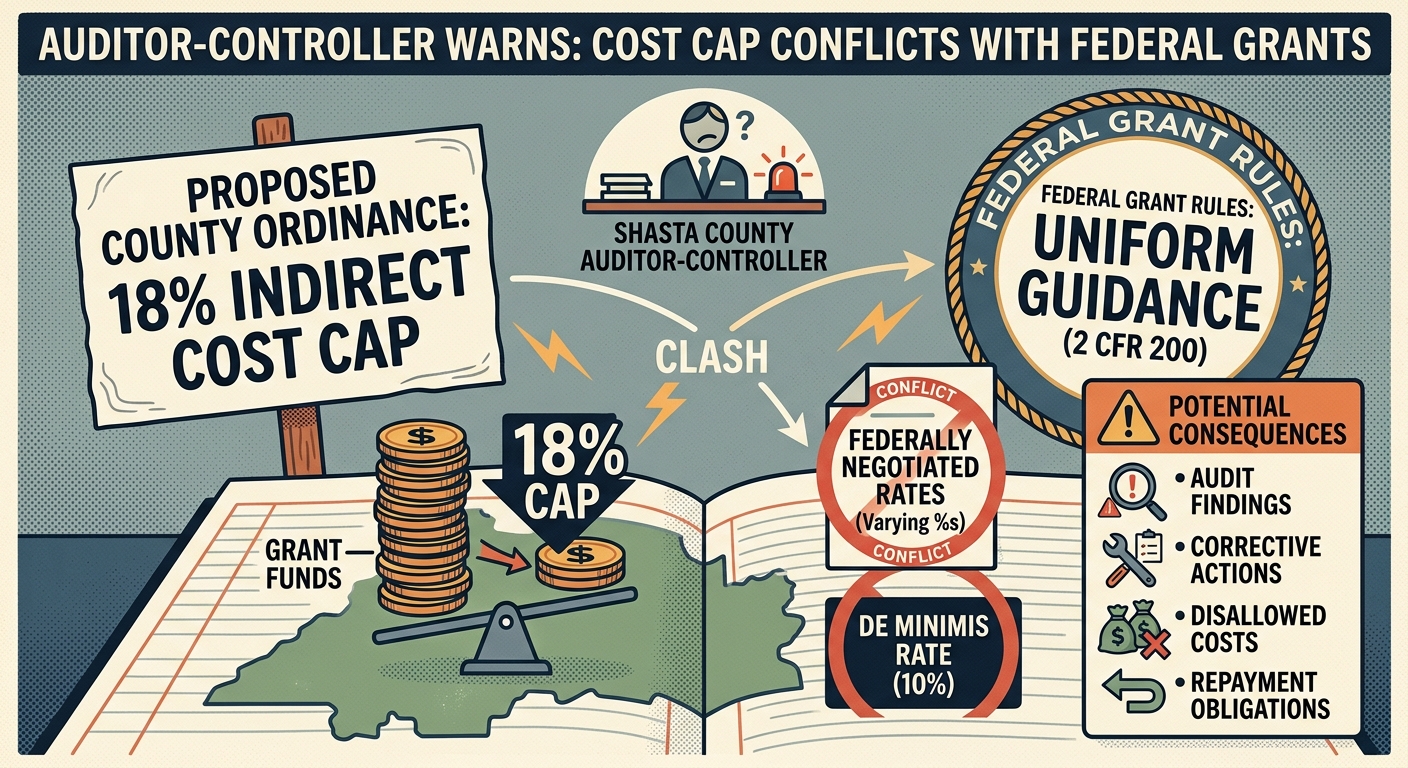
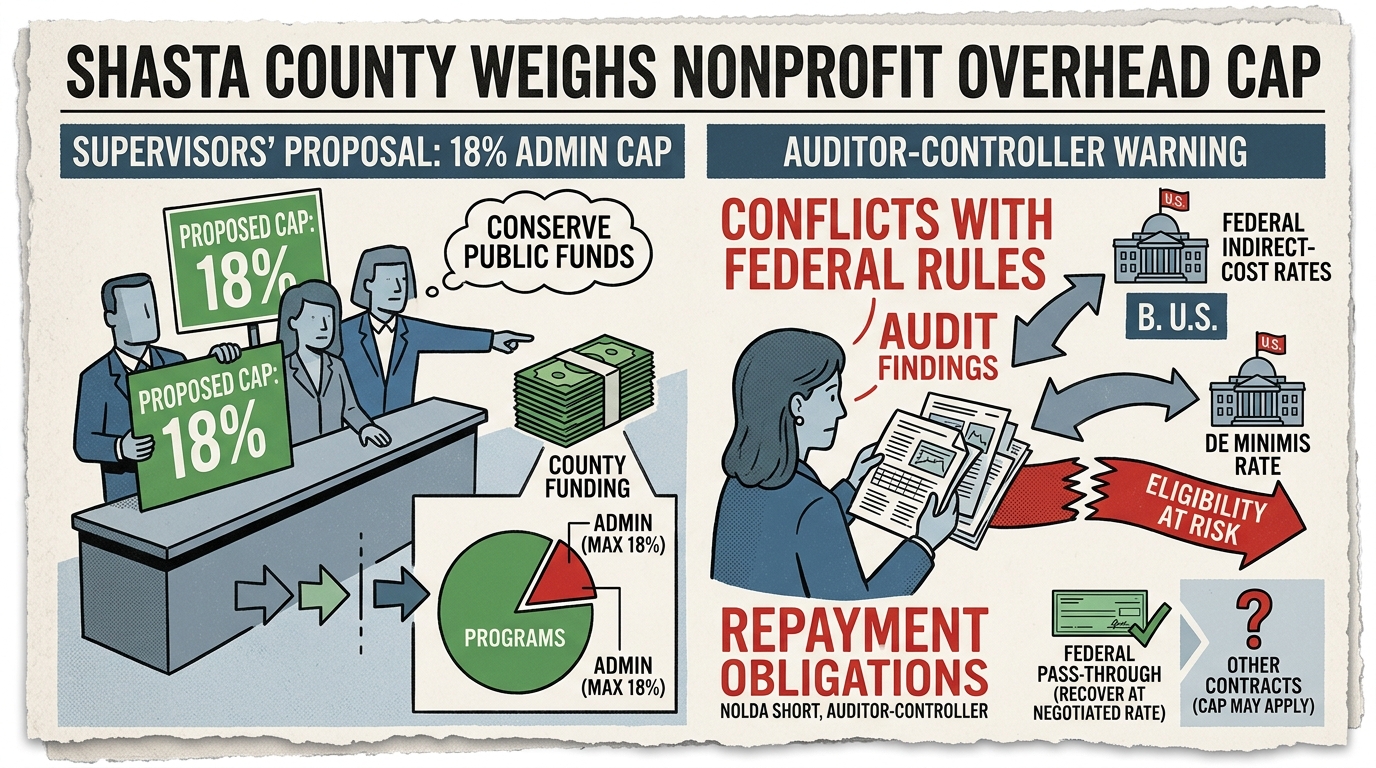
Auditor-Controller Nolda Short says a blanket county cap on indirect-cost recovery could conflict with federal Uniform Guidance and create audit and repayment risk.

A June 16 staff report recommends advancing an ordinance to limit nonprofit administrative costs on county funding or support, while the Auditor-Controller warns the proposal could clash with federal grant rules.