Shasta County backs ballot-curing bill in separate vote-by-mail action
The board signed onto AB 2604, while also taking up a separate SB 1420 support item on ballot processing and early voting.


The board signed onto AB 2604, while also taking up a separate SB 1420 support item on ballot processing and early voting.

The board approved a resolution letting Public Works temporarily close county road lanes for Ironman Group events, with permit, notice, insurance and cleanup requirements.

Staff told commissioners California is still well short of its 2030 demand-flexibility target as the agency approved its latest Integrated Energy Policy Report.

The grants will fund apprenticeship support, student counseling and contractor training tied to heat pumps and other residential electrification work.

Project SIGNAL will study short-term forecasting of rooftop solar, batteries and EV charging, with staff saying the work could improve grid reliability and ratepayer savings.

Supervisors are being asked to approve a six-month medical-management agreement for a severely injured county employee, with costs capped and no added General Fund impact expected.

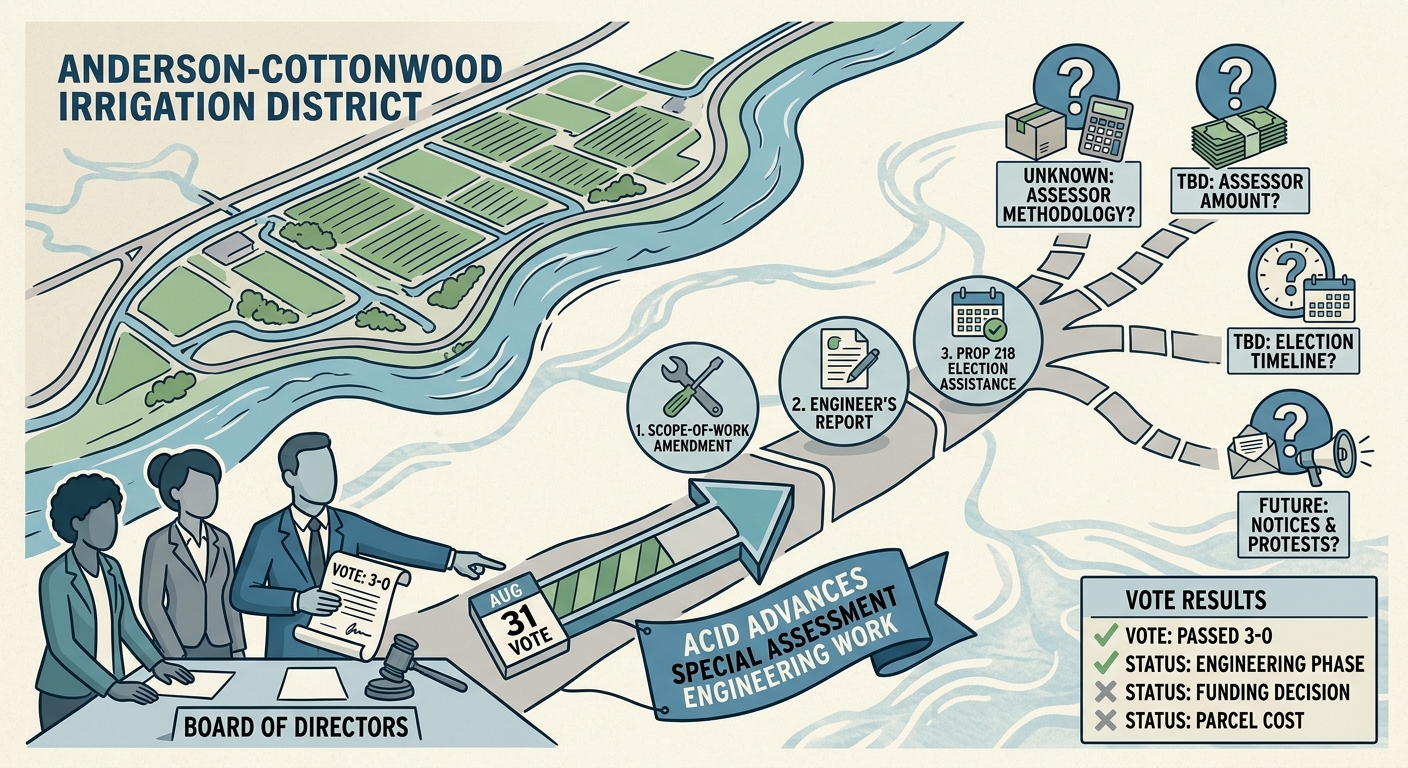
The June 11 meeting set up the district’s 2026 election cycle, confirmed a finance manager transition and advanced a large offseason capital plan for further refinement.

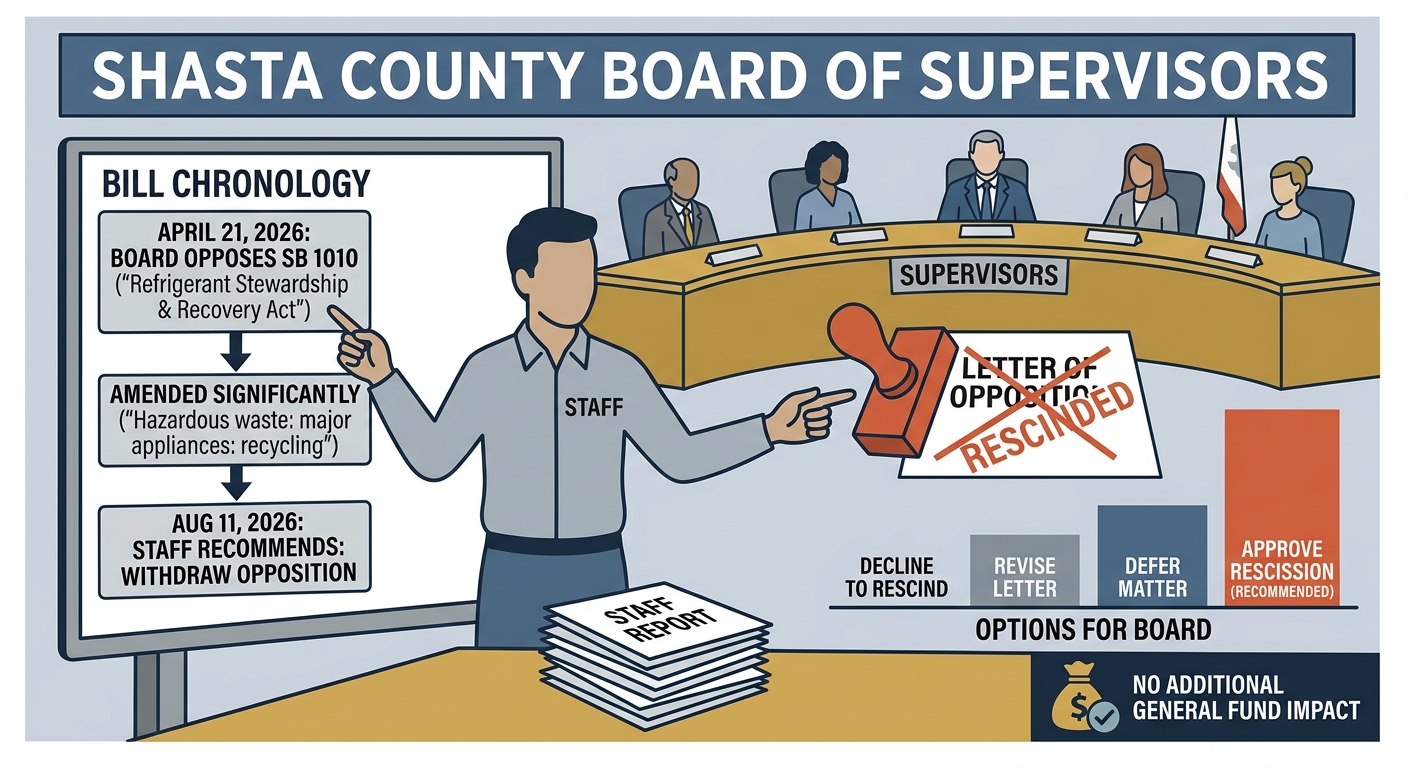
The board formally asked lawmakers to pass a statewide process for voters to fix unsigned or mismatched vote-by-mail ballots.

At a July 15 hearing, commissioners said they will review comments from more than 800 people before deciding whether to extend existing phone-service standards to wireless carriers or adopt new rules.

Public Works is asking supervisors to add $100,000 to the ACC Environmental Consultants agreement and push its term to Dec. 31, 2027.

A Risk Management memo asks supervisors to authorize a Paradigm Clinical Solutions deal that would cap county costs at $292,400 for claim 25-0495.

The board’s July 14 declaration formally records Measure B as passed and would add a county charter amendment if implemented.

At a May 28 hearing, staff outlined a rewrite of California’s cap-and-invest program that would steer more allowance value to electricity bill relief, create a $4 billion industrial incentive fund and tighten long-term allowance budgets.

The 3-0 vote in Rulemaking 22-04-003 replaces an older acquisition process with expedited review timelines and ratepayer protections for failing, at-risk and potentially at-risk water utilities.

Commissioners updated the Solar on Multifamily Affordable Housing program but did not open it to new construction or master-metered properties.

The California Energy Commission approved a grant amendment that transfers an EPIC-funded tribal microgrid project from the Barona Group to OurEnergy L.L.C., shifts the site to Weitchpec and extends the term by 21 months.

The July 8 vote backs a four-year EPIC project to test distributed-intelligence applications on 9,000 smart meters in PG&E territory.

The California Energy Commission approved the final 2025 IEPR at its July 8 business meeting and backed the action with a CEQA finding that adoption is not a project.

Backup materials for the July 8 business meeting show the commission poised to approve the final Integrated Energy Policy Report after workshops, webinars, a draft report and a proposed final version.

The multiyear agreement will support forecasting, electrification analysis, demand-flexibility tools and the commission’s Common Platform.

At its July 8 business meeting, the California Energy Commission approved four workforce-related awards and one EPIC research grant tied to electrification, apprenticeships and grid forecasting.

The California Energy Commission approved four grants tied to residential clean-energy training, apprenticeship support and contractor pipeline development.

The California Energy Commission backed a CRESST award to the State Building and Construction Trades Council of California to help income-qualified apprentices stay in residential energy-efficiency training.

The grant will fund non-instructional services meant to help Los Angeles Trade-Technical College students complete training and move into clean-energy jobs.